



AI LAB
Mood-Based Netflix Recommender with RAG
Build a project on a mood-based Netflix recommender with RAG that grounds every suggestion in a real catalog
Verified Certificate on Successful Completion
What is in it for you?

LLM tokens included
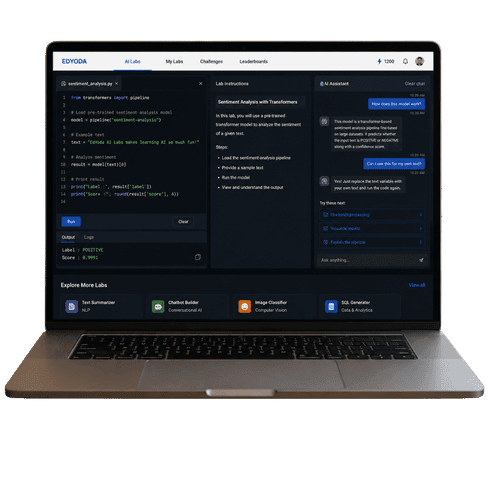
A metered token budget is bundled in, call real models from your code with no API key or extra cost.

AI mentor on tap
Stuck? An in-IDE AI mentor gives hints and debugging help, without handing you the answer.

Instant grading
Submit and get an objective, rubric-based verdict in seconds, pass, or actionable feedback.

Verified certificate
Pass and earn a shareable, verifiable certificate you can add to your LinkedIn profile.

Zero-setup cloud IDE
A ready sandbox with the libraries pre-installed, start building in the browser instantly.

Retry until you pass
Iterate as many times as your budget allows; a fail keeps the lab open to try again.
Grab your slot before the offer expires
Start solving today!
Basic Info
Select Offers
Project Statement
Business Problem
Streaming and content platforms lose viewers when discovery fails — over 70% of users abandon a session within 90 seconds if nothing feels right, and a naive LLM recommender confidently suggests titles that don't even exist in the library. For a catalog of 10,000+ titles serving millions of daily 'what should I watch' queries, hallucinated or constraint-ignoring recommendations directly erode retention and trust.

AI Solution
You'll build a RAG pipeline that chunks the title catalog, ingests it into a vector store, and retrieves the most relevant candidates for each natural-language mood query. The LLM then generates recommendations grounded strictly in retrieved catalog entries, honoring explicit constraints like runtime limits and tone ('lighter', 'cozy', 'dark') and justifying each pick from the title's own tags and synopsis.

Potential Impact
Grounded retrieval eliminates hallucinated titles and lifts recommendation relevance, cutting failed-discovery sessions and protecting the ~15-25% of watch time driven by suggestion surfaces. Teams can ship trustworthy semantic search over any catalog in days instead of weeks, with recommendations that respect user constraints and boost session engagement and CSAT.
Skills that you will build
Solve a real AI-engineering problem that builds in-demand skills and a portfolio-ready, verified certificate.
.ffb97545.png&w=16&q=75&dpl=dpl_9BwYgWFpyUrhRysbsyKfenbS3Snh) Designing chunking strategies for structured catalog dataIngesting documents into a vector databaseSemantic retrieval with vector searchBuilding retrieval-augmented generation (RAG) pipelinesGrounding LLM outputs to eliminate hallucinationApplying query constraints (runtime, tone) during generationPrompt engineering for justified, evidence-backed answers
Designing chunking strategies for structured catalog dataIngesting documents into a vector databaseSemantic retrieval with vector searchBuilding retrieval-augmented generation (RAG) pipelinesGrounding LLM outputs to eliminate hallucinationApplying query constraints (runtime, tone) during generationPrompt engineering for justified, evidence-backed answersAI Lab Pre-requisites
- Comfortable writing Python functions
- Basic understanding of how LLMs and prompts work
- Familiarity with the idea of embeddings or vector search (helpful, not required)
Target Roles
- AI Engineer
- LLM Application Developer
- RAG Systems Engineer
- AI Solutions Architect
Combo Offers
Most Frequently Bought
🛡 Verified certificate on pass
Super Saver Offer
🛡 Verified certificate on pass
Create Your Own Combo
🛡 Verified certificate on pass

for successfully completing the 'Mood-Based Netflix Recommender with RAG' project
Add a Industry Recognized
Project Certificate To Your Resume
Industry Recognized
Project Certificate

Career Advancements
Elevate your career with a respected certificate
Industry Respect
Gain credibility in the field
Networking
Connect with experts and peers
Opportunities
Attract exciting job prospects and promotions

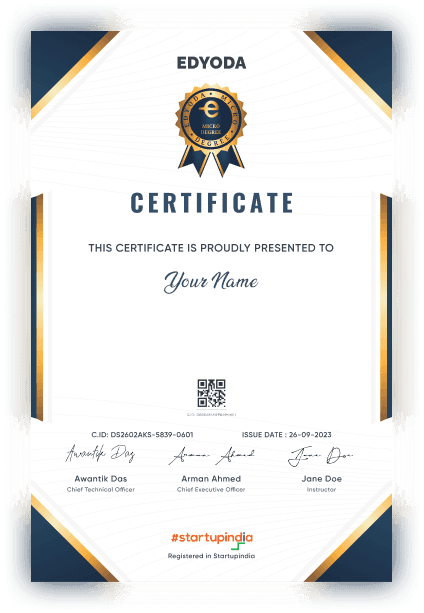
for successfully completing the 'Mood-Based Netflix Recommender with RAG' project

Frequently asked questions
Are LLM tokens included?
Yes. The lab runs in a cloud IDE with a metered LLM budget included — no separate API keys or billing needed.
What do I earn on completion?
A verified, shareable credential you can add to LinkedIn or your resume, proving you built a grounded RAG recommender.
Do I need prior RAG experience?
No. If you can write Python functions and understand basic prompting, you can complete this lab and learn the RAG workflow hands-on.
Will this reveal the answer to me?
No. You solve one real problem yourself with an AI mentor for guidance and auto-grading for feedback — the solution is yours to build.
How is my work evaluated?
An auto-grader checks that your recommender retrieves from the catalog, grounds every suggestion in real titles, and respects each query's constraints.
How long does it take?
Most learners finish in about 75 minutes, depending on your familiarity with vector search and RAG.