




MICRO DEGREE
Drone Development Engineer
Become a Drone Development Engineer in just 6 weeks

100% LIVE Interactive Classes
Become a Drone Development Engineer in just 6 weeks
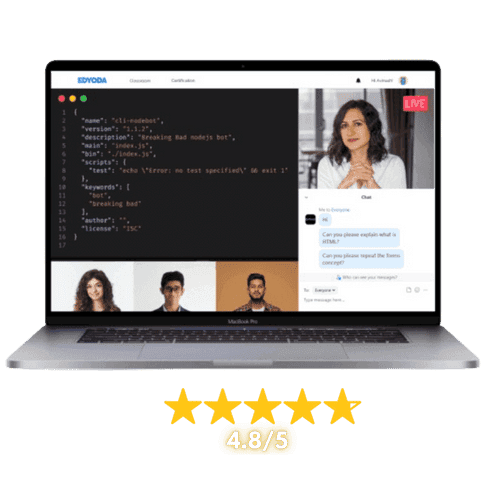
100% LIVE Interactive Classes

Reserve your spot today!
Basic Info
Select Offers
Application closes on:11 Oct 2026
Get instant access of pre-course material!
Talk to Us
We’re here to help! Reach us at:
What is in it for you?

 100% Live Classes
Instructor-led Live Sessions
Attend 4 weeks of instructor led live classes from the top 1% industry experts


Projects & Case Studies
Projects & Case Studies
Gain hands-on experience with projects and real-world case studies for impactful learning.

Verified Certificate
Verified Certificate
Earn a industry recognized certificate and kick start your career

Session Recordings
Session Recordings
Revisit older chapters anytime with recorded sessions

Flexible Schedule
Flexible Schedule
Choose live classes from different cohorts that fit your availability.

Hands-on Lab Access
Hands-on Lab Access
Students get access to labs to practice their learnings
 100% Moneyback Guarantee
Grab your slot before the offer expires
Reserve your spot today!
Basic Info
Select Offers
Application closes on:11 Oct 2026
Get instant access of pre-course material!
Talk to Us
We’re here to help! Reach us at:
Learn from Top 1%
Sr. Managers, VPs, CXOs, Directors & Founders from companies shaping the future.

Combo Offers
Create Your Own Combo
100% Moneyback Guarantee
Available in 4 monthly installments at $146/month
Reserve your spot today!
Curriculum
Duration: 6 weeks
Max Batch Size: 15 persons
Live Sessions Schedule  Sat - Sun (Weekends Only)
  Timing 7:00 AM - 9:00 AM / 8:30 AM - 10:30 AM / 11:00 AM - 1:00 PM / 5:00 PM - 7:00 PM / 7:30 PM - 9:30 PM EST

- History and Evolution of Drones
- Types of Drones and Their Applications
- Core Components of a Drone System
- Current Drone Industry Landscape
- Future Trends in UAV Technology
- Frame Design Principles
- Materials Selection Criteria
- Primary Frame Materials
- Design Optimization Strategies
- Manufacturing Considerations
- Motor Technologies and Selection
- Electronic Speed Controllers (ESCs)
- Propeller Design and Selection
- System Integration and Optimization
- Battery Technologies for Drone Applications
- Battery Configuration and Pack Design
- Battery Management Systems (BMS)
- Power Distribution Architecture
- Charging Systems and Protocols
- Inertial Measurement Unit (IMU) Systems
- Global Positioning System (GPS) Integration
- Barometric Pressure Sensors
- Compass and Magnetometer Systems
- Sensor Fusion and Data Processing
- Radio Frequency Communication Fundamentals
- Control Link Systems
- Telemetry and Data Transmission
- Video and Imaging Systems
- Network Integration and Connectivity
- Security and Anti-Jamming Technologies
- PID Control Theory Fundamentals
- PID Tuning for Flight Control
- Aviation-Specific PID Applications
- Performance Metrics and Analysis
- Practical Implementation Considerations
- Troubleshooting Common Issues
- Safety and Certification Considerations
- Introduction to Attitude Estimation
- Coordinate Systems and Reference Frames
- Inertial Sensors and Measurement Principles
- Sensor Fusion Fundamentals
- Practical Implementation Considerations
- Performance Evaluation and Testing
- Fundamental Control Modes
- Autopilot Systems and Modes
- Fly-by-Wire Control Systems
- Stability Augmentation Design
- Mode Management and Logic
- Flight Phase-Specific Modes
- System Integration and Architecture
- GPS-Based Navigation and Waypoint Systems
- Obstacle Detection and Avoidance Techniques
- Path Planning Algorithms for UAVs
- Indoor Navigation and Positioning Systems
- Vision-Based Navigation Methods
- Gimbal Systems and Camera Stabilization
- Delivery and Release Mechanisms
- Sensor Payloads for Data Collection
- Spraying and Precision Application Systems
- Payload Integration with Flight Systems
- Custom Payload Development for Specific Applications
- Regulations
- Prepare and Mount the Motors
- Install and Configure ESCs
- Mount Flight Controller and Basic Wiring
- Install FlySky FSi6 Receiver and Radio Setup
- Software Configuration and Motor Testing
- Final Assembly and Pre-Flight Checks
Mentors

10+ Years, Drone Startup Founder, Ex-Skydio


12+ Years, Sr. Tech Lead, Ideaforge


20+ Years, Sr. R&D Engineer, Ideaforge

Course Includes

LIVE Interactive Sessions

Quizzes, Assignments & Projects

Study Materials & Session Recordings

Lab Access

Certificate
Tools Covered

Course Includes
LIVE Interactive Sessions
Quizzes, Assignments & Projects
Study Materials & Session Recordings
Lab Access
Certificate
Course Pre-requisites
.ffb97545.png&w=16&q=75&dpl=dpl_9BwYgWFpyUrhRysbsyKfenbS3Snh) Basic understanding of electronics and circuit fundamentals
Basic understanding of electronics and circuit fundamentals- Foundational knowledge of physics (mechanics, aerodynamics basics)
- Basic programming experience (preferably Python or C/C++)
- Familiarity with basic mathematical concepts (algebra, trigonometry)
Outcomes
- Build and assemble complete drone systems including frames, motors, ESCs, and flight controllers
- Configure and calibrate flight controllers using ArduPilot and PX4 firmware for stable operation
- Develop autonomous flight capabilities including waypoint navigation and mission planning
- Implement sensor integration for GPS navigation, altitude hold, and obstacle avoidance
- Design and optimize propulsion systems and battery configurations for specific mission profiles
- Program drone behavior and control logic using Python and ROS 2 frameworks
- Analyse drone flight performance through simulation environments and real-world flight testing
- Integrate payload systems and communication modules for application-specific drone solutions
Projects You Will Build
Practical, enterprise-grade projects that reflect real industry challenges
Precision Agriculture Drone
Design and build a custom drone equipped with a precision spraying system for targeted crop treatment. Utilize GPS-based waypoint navigation, sensor fusion for terrain following, and payload integration techniques to create an autonomous solution for efficient and sustainable farming.
Search and Rescue Drone
Develop a drone system with obstacle avoidance, thermal imaging integration, and long-range telemetry for search and rescue operations. Implement flight control algorithms using PX4 firmware and ROS 2, and configure autonomous search patterns with real-time data transmission to a ground station.
Autonomous Delivery Drone Prototype
Construct a drone platform capable of autonomously transporting and delivering small packages along predefined routes. Optimize the frame design, propulsion and power systems, and payload release mechanisms while programming mission logic for safe takeoff, transit, delivery, and return-to-home functionality.

for successfully completing the 'Drone Development Engineer' course conducted from 29 Aug 2026 to 10 Oct 2026
Add a Industry Recognized
Certificate To Your Resume
Industry Recognized
Certificate
Learn the best from the best

Career Advancements
Elevate your career with a respected certificate
Industry Respect
Gain credibility in the field
Networking
Connect with experts and peers
Opportunities
Attract exciting job prospects and promotions


for successfully completing the 'Drone Development Engineer' course conducted from 29 Aug 2026 to 10 Oct 2026

100% Moneyback Guarantee
Top 1% Recruiters - Get interview access to 550+ Companies

Frequently Asked Questions
Everything you need to know about the course
You should have a basic understanding of electronics, physics fundamentals (mechanics and aerodynamics), and some introductory programming experience, preferably in Python or C/C++. No prior drone-building experience is required, as the course covers drone design and assembly from the ground up.
The curriculum covers drone system architecture and assembly, flight controller configuration and calibration (ArduPilot/PX4), propulsion and power system design, sensor integration (GPS, IMU, barometer, obstacle sensors), autonomous flight programming, ROS 2-based drone control, simulation and real-world flight testing, and payload integration for real-world applications.
The course spans 6 weeks and you should expect to commit approximately 10-15 hours per week, including live interactive classes, hands-on project work, self-study, and drone testing/debugging sessions.
You will complete three major industry-relevant projects: a precision agriculture drone, a search and rescue drone, and an autonomous delivery drone prototype. Each project involves physical assembly, firmware configuration, programming autonomous behaviors, and flight testing through simulation and real-world trials.
Graduates are prepared for roles such as Drone Engineer, Robotics/Automation Specialist, Aerospace/Avionics Engineer, and Drone Pilot/Operator. The hands-on portfolio of drone projects demonstrates practical engineering skills highly valued by employers in the rapidly growing UAV, aerospace, and robotics industries.
You will work extensively with PX4 Autopilot and ArduPilot firmware, ROS 2 for robot programming, Python for control logic and automation scripting, Arduino for sensor interfacing, MATLAB for system analysis, and simulation tools like Gazebo for virtual flight testing before real-world deployment.
The Micro Degree course is an online LIVE course, where LIVE sessions will be conducted online on our Classroom platform. Prior to the start of the course, you'll receive preparatory material in the form of recorded content which can be access on the same platform.
In this course instructors will use English language for teaching.
Upon successful registration, you will receive a confirmation email on your registered email ID. In this email you will receive login details for your newly created account on the Edyoda Classroom platform (https://classroom.edyoda.com). Additionally, you will receive a PDF guide containing step-by-step instructions on how to utilize the platform to access live sessions and learning materials.
Our instructors are the industry experts with a minimum working experience of 10 years with a strong technical and teaching background. They bring industry knowledge and practical expertise to the course.
Yes, the course includes online assignments, quizzes, and a final project to reinforce your learning and assess your proficiency in Drone Development Engineer.
Yes, you can interact with instructors and fellow students through discussion forums, live Q&A sessions. We encourage a supportive learning community.
Yes, hands-on lab access is available at an additional cost, typically around ₹2,750 (or $30 for international learners) per year. This is the standard rate for most tracks, though specialized labs such as Data and Security may be priced differently. Beyond just practicing what you learn, the labs let you host and showcase your projects live, so you can share your work on social media or present it directly to recruiters as part of your portfolio.
We offer a 100% money-back guarantee to ensure your complete satisfaction. If you're not satisfied, you can request a full refund within 3 days of purchase or before the second session, whichever comes earlier. Simply contact our support team(support@edyoda.com) with your purchase details, such as the order ID or email address, and share your reason for the refund. Requests made after 3 days or after the second session will not be eligible for a refund. There are no hidden charges, you will receive the full amount paid. Refunds are processed within 7–10 business days and credited back to your original payment method.
Recommendations




