




MICRO DEGREE
AI Solutions Architect
Become a Certified AI Solutions Architect and design enterprise AI solutions!

100% LIVE Interactive Classes
Become a Certified AI Solutions Architect and design enterprise AI solutions!
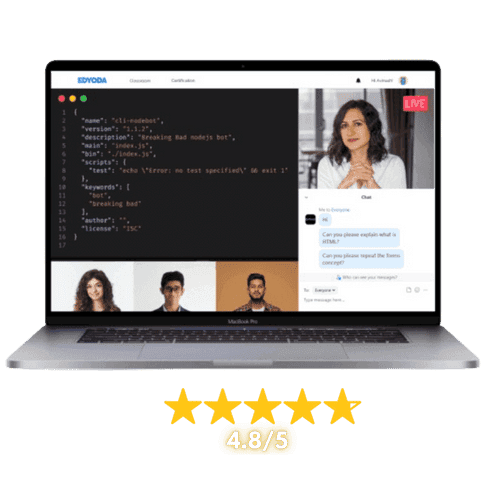
100% LIVE Interactive Classes

Reserve your spot today!
Basic Info
Select Offers
Application closes on:07 Oct 2026
Get instant access of pre-course material!
Talk to Us
We’re here to help! Reach us at:
What is in it for you?

 100% Live Classes
Instructor-led Live Sessions
Attend 4 weeks of instructor led live classes from the top 1% industry experts


Projects & Case Studies
Projects & Case Studies
Gain hands-on experience with projects and real-world case studies for impactful learning.

Verified Certificate
Verified Certificate
Earn a industry recognized certificate and kick start your career

Session Recordings
Session Recordings
Revisit older chapters anytime with recorded sessions

Flexible Schedule
Flexible Schedule
Choose live classes from different cohorts that fit your availability.

Hands-on Lab Access
Hands-on Lab Access
Students get access to labs to practice their learnings
 100% Moneyback Guarantee
Grab your slot before the offer expires
Reserve your spot today!
Basic Info
Select Offers
Application closes on:07 Oct 2026
Get instant access of pre-course material!
Talk to Us
We’re here to help! Reach us at:
Learn from Top 1%
Sr. Managers, VPs, CXOs, Directors & Founders from companies shaping the future.

Combo Offers
Create Your Own Combo
100% Moneyback Guarantee
Available in 4 monthly installments at $86/month
Reserve your spot today!
Curriculum
Duration: 6 weeks
Max Batch Size: 15 persons
Live Sessions Schedule  Sat - Sun (Weekends Only)
  Timing 7:00 AM - 9:00 AM / 8:30 AM - 10:30 AM / 11:00 AM - 1:00 PM / 5:00 PM - 7:00 PM / 7:30 PM - 9:30 PM EST

- The evolution of AI roles: from data scientist to solution architect
- Responsibilities, deliverables, and stakeholder management
- Translating business needs into AI technical solutions
- AI project lifecycle and success metrics (KPIs, ROI, SLAs)
- Common architecture archetypes and solution design patterns
- Skills matrix and career roadmap for an AI Solution Architect
- Identifying and prioritizing AI opportunities within organizations
- Business case development and ROI analysis for AI initiatives
- Stakeholder alignment and communication frameworks
- Defining problem statements, constraints, and measurable success criteria
- Building AI adoption roadmaps and maturity models
- Risk, compliance, and ethical trade-off decisions at design time
- Data sourcing: internal, external, and synthetic data pipelines
- Data quality, profiling, and validation automation
- Data governance, lineage, metadata, and cataloging tools
- Designing data architectures: data lake vs data warehouse vs vector store
- Feature engineering, feature stores, and reusable feature patterns
- Privacy, compliance, and data security best practices
- Model taxonomy: ML, DL, foundation models, multimodal models
- LLMs and RAG (Retrieval-Augmented Generation) architectures
- Model selection criteria: accuracy, interpretability, latency, and cost
- Evaluation methods: offline metrics, online testing, A/B, and drift evaluation
- Model optimization: pruning, distillation, quantization, and acceleration
- Explainability and bias detection: SHAP, LIME, and fairness metrics
- AI system design principles: scalability, fault tolerance, and modularity
- Core architecture styles: microservices, event-driven, streaming, and APIs
- Batch vs online vs hybrid AI workflows
- Designing RAG pipelines: vector stores, embedding caches, retrieval APIs
- Interfacing with external systems and APIs (CRM, ERP, IoT, etc.)
- Security design: IAM, zero trust, encryption, and auditability
- Compute options: CPU, GPU, TPU, distributed and edge compute
- Infrastructure-as-Code (Terraform, CloudFormation, Bicep) for reproducibility
- Storage and data management layers for AI (object, block, vector)
- Containerization and orchestration (Docker, Kubernetes, Ray)
- Cost modeling, resource optimization, and elasticity in cloud infra
- Multi-environment design: Dev → QA → Prod isolation and governance
- MLOps lifecycle: data, model, and code versioning
- CI/CD for ML pipelines: build, test, deploy, promote
- Experiment tracking and reproducibility (MLflow, Vertex Pipelines, etc.)
- Model registry, approval gates, and governance integration
- Deployment strategies: shadow, canary, blue-green, and rollback
- Feedback loops: monitoring, retraining, and human-in-the-loop systems
- Model serving architectures: batch, real-time, streaming, and edge
- Serving frameworks: FastAPI, Triton, KFServing, Ray Serve
- Scaling patterns: autoscaling, caching, sharding, and load balancing
- Latency and throughput optimization: batching and vectorization
- Versioning and traffic management for experiments and rollouts
- Edge inference and hybrid deployments for IoT and low-latency apps
- Metrics collection: data, model, and business KPIs
- Drift detection: data drift, concept drift, and anomaly detection
- Logging, tracing, and distributed observability best practices
- Incident management, SLOs, and post-mortems
- Monitoring frameworks: Prometheus, Grafana, Evidently AI, etc.
- End-to-end health monitoring dashboards for AI systems
- Principles of responsible AI: fairness, transparency, and accountability
- Explainability frameworks and governance documentation (model cards)
- Regulatory frameworks: GDPR, CCPA, HIPAA, and ISO standards
- Bias detection, mitigation, and ethical review workflows
- Auditability and reproducibility pipelines for compliance
- Governance artifacts: risk matrix, audit logs, and decision documentation
- Cloud AI landscape overview: AWS SageMaker, Azure ML, GCP Vertex AI
- Mapping cloud services for compute, data, orchestration, and monitoring
- Designing ML pipelines using cloud-native components
- Security, IAM, and compliance across providers
- Multi-cloud orchestration, portability, and cost optimization strategies
- Cross-cloud reference architectures and real-world design trade-offs
- Building the AI business case: value realization and ROI modeling
- Organizational models for AI scale-up (Center of Excellence, federated)
- Procurement, vendor evaluation, and make-vs-buy decisions
- Cost, sustainability, and ethical considerations at scale
- AI delivery documentation: architecture deck, cost sheet, compliance report
- Capstone Project: Design an end-to-end AI solution from data to deployment
Mentors

20+ Years, Sr. Engineering Manager, Amazon


20+ Years ,Sr. VP Accenture, Ex-ExxonMobil

Course Includes

LIVE Interactive Sessions

Quizzes, Assignments & Projects

Study Materials & Session Recordings

Lab Access

Certificate
Course Includes
LIVE Interactive Sessions
Quizzes, Assignments & Projects
Study Materials & Session Recordings
Lab Access
Certificate
Course Pre-requisites
.ffb97545.png&w=16&q=75&dpl=dpl_9BwYgWFpyUrhRysbsyKfenbS3Snh) Minimum 10 years of experience in software engineering/devops/architect
Minimum 10 years of experience in software engineering/devops/architect - Foundational knowledge of AI is discussed in the beginning
- Basic understanding of cloud computing platforms (AWS, GCP, or Azure)
Outcomes
- Design end-to-end AI solution architectures that translate business requirements into scalable technical blueprints
- Build and orchestrate ML pipelines covering data ingestion, feature engineering, model training, and serving
- Implement Generative AI and AI agent solutions using modern frameworks and cloud-native services
- Architect MLOps infrastructure for model versioning, automated retraining, monitoring, and continuous delivery
- Design responsible AI frameworks incorporating model interpretability, bias mitigation, and governance policies
- Deploy and manage AI workloads on cloud platforms using containerization and orchestration tools
- Analyse system reliability, latency, and cost trade-offs when selecting AI deployment patterns
- Lead cross-functional AI solution design with stakeholder management and technical documentation
Projects You Will Build
Practical, enterprise-grade projects that reflect real industry challenges
Intelligent Retail Demand Forecasting Platform
Design and deploy an end-to-end AI-powered demand forecasting system for a retail chain, integrating structured sales data with external signals such as weather and promotions. Build a scalable ML pipeline from data ingestion through model training and serve predictions via a real-time API with monitoring and automated retraining capabilities.
Enterprise MLOps Platform for Computer Vision
Architect a production-grade MLOps platform that supports a computer vision use case such as infrastructure defect detection. Implement model versioning, experiment tracking, CI/CD pipelines for model deployment, and real-time performance monitoring using containerized microservices on a cloud platform.
Responsible AI-Powered Healthcare Recommendation System
Build a responsible AI system that provides personalized treatment recommendations for chronic disease patients. Incorporate model explainability dashboards, bias detection and mitigation workflows, and governance controls to ensure compliance with healthcare regulations and ethical AI standards.

for successfully completing the 'AI Solutions Architect' course conducted from 25 Aug 2026 to 06 Oct 2026
Add a Industry Recognized
Certificate To Your Resume
Industry Recognized
Certificate
Learn the best from the best

Career Advancements
Elevate your career with a respected certificate
Industry Respect
Gain credibility in the field
Networking
Connect with experts and peers
Opportunities
Attract exciting job prospects and promotions

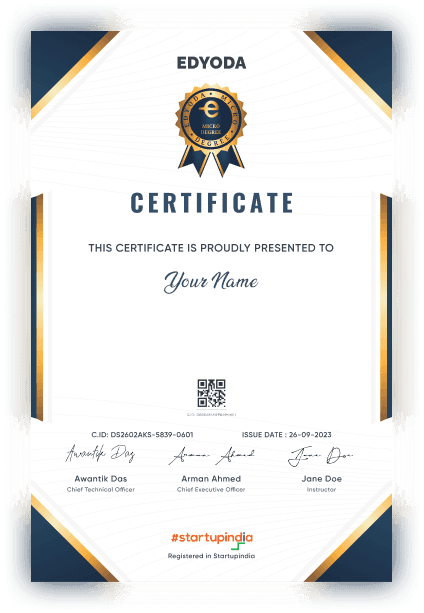
for successfully completing the 'AI Solutions Architect' course conducted from 25 Aug 2026 to 06 Oct 2026

100% Moneyback Guarantee
Top 1% Recruiters - Get interview access to 550+ Companies

Frequently Asked Questions
Everything you need to know about the course
You should have at least 2 years of experience in software engineering, data science, or a related technical role. Proficiency in Python, foundational knowledge of machine learning and deep learning concepts, and basic familiarity with cloud computing platforms are expected.
The curriculum covers the full AI lifecycle including data engineering, ML pipeline design, model training and serving, Generative AI and AI agents, MLOps infrastructure (model versioning, monitoring, CI/CD), responsible AI (interpretability, bias mitigation, governance), cloud-native AI deployments, and AI solution architecture for enterprise use cases.
The program runs for 8 weeks and includes interactive live classes, hands-on projects, and mentorship sessions. You should plan to dedicate approximately 10-15 hours per week to attend live sessions, complete assignments, and work on capstone projects.
You will work on three industry-relevant projects including building a retail demand forecasting platform, architecting an enterprise MLOps platform for computer vision, and designing a responsible AI healthcare recommendation system. Each project involves designing, building, and deploying real AI solutions end-to-end.
This program prepares you for senior technical roles such as AI Solutions Architect, Machine Learning Engineer, AI/ML Consultant, and Cloud Architect. You will gain the ability to lead end-to-end AI solution design, manage cross-functional teams, and make architectural decisions that drive business impact—skills highly sought after in the industry.
You will work with Python, TensorFlow/PyTorch for model development, AWS SageMaker for cloud-based ML workflows, Kubernetes and Docker for containerized deployments, MLflow for experiment tracking and model registry, and frameworks for building Generative AI and AI agent solutions. All tools are industry-standard and directly applicable to production environments.
The Micro Degree course is an online LIVE course, where LIVE sessions will be conducted online on our Classroom platform. Prior to the start of the course, you'll receive preparatory material in the form of recorded content which can be access on the same platform.
In this course instructors will use English language for teaching.
Upon successful registration, you will receive a confirmation email on your registered email ID. In this email you will receive login details for your newly created account on the Edyoda Classroom platform (https://classroom.edyoda.com). Additionally, you will receive a PDF guide containing step-by-step instructions on how to utilize the platform to access live sessions and learning materials.
Our instructors are the industry experts with a minimum working experience of 10 years with a strong technical and teaching background. They bring industry knowledge and practical expertise to the course.
Yes, the course includes online assignments, quizzes, and a final project to reinforce your learning and assess your proficiency in AI Solutions Architect.
Yes, you can interact with instructors and fellow students through discussion forums, live Q&A sessions. We encourage a supportive learning community.
Yes, hands-on lab access is available at an additional cost, typically around ₹2,750 (or $30 for international learners) per year. This is the standard rate for most tracks, though specialized labs such as Data and Security may be priced differently. Beyond just practicing what you learn, the labs let you host and showcase your projects live, so you can share your work on social media or present it directly to recruiters as part of your portfolio.
We offer a 100% money-back guarantee to ensure your complete satisfaction. If you're not satisfied, you can request a full refund within 3 days of purchase or before the second session, whichever comes earlier. Simply contact our support team(support@edyoda.com) with your purchase details, such as the order ID or email address, and share your reason for the refund. Requests made after 3 days or after the second session will not be eligible for a refund. There are no hidden charges, you will receive the full amount paid. Refunds are processed within 7–10 business days and credited back to your original payment method.
Recommendations




